

Invoking the Fifth Amendment

The Fifth Amendment is one of the most recognized constitutional protections in the United States. Whether you’ve heard someone say they “plead the Fifth” in a courtroom or on television, the principle behind it is serious. It protects people from being forced to testify against themselves in a criminal case. But when exactly can you invoke your 5th Amendment right, and how does it work in Minnesota?
At Capitol City Law Group, we help Minnesotans understand and assert their constitutional protections in criminal investigations, courtroom proceedings, and grand jury subpoenas. If you are under investigation or called to testify, call us today at (651) 705-6311 to protect your rights.
What Is the Fifth Amendment?
The Fifth Amendment, ratified in 1791 as part of the U.S. Bill of Rights, contains several protections, but the most commonly known is the right against self-incrimination. In plain terms, it means you cannot be forced to say something that could be used to convict you of a crime.
This protection applies at both the state and federal levels, including here in Minnesota. If you are questioned by law enforcement, subpoenaed to testify in court, or face criminal charges, you may have the right to invoke the Fifth Amendment and remain silent.
Invoking 5th Amendment Rights in Minnesota
Invoking 5th Amendment rights means you are choosing not to answer a question, or sometimes not to testify at all, because your answer can be used against you. You may invoke your Fifth Amendment right in the following situations:
- During police interrogations
- In criminal trials
- In civil depositions
- When testifying before a grand jury or legislative body
It’s important to know that invoking the Fifth Amendment in the United States must be done clearly. You should say something like, “I am invoking my Fifth Amendment right to remain silent.” Simply staying quiet or refusing to answer without explanation may not fully protect you.
In Minnesota, the Fifth Amendment applies during both state and federal proceedings, and your right cannot be used as evidence of guilt. In other words, prosecutors are not allowed to suggest that your silence means you must have something to hide.
Fifth Amendment Miranda Rights
The Fifth Amendment is also closely tied to Miranda rights. These are the rights police must read to you when you are taken into custody and interrogated. They include:
- The right to remain silent
- The right to an attorney
- The warning that anything you say can be used against you in court
If law enforcement fails to read you your Fifth Amendment Miranda rights when required, anything you say may be excluded from evidence. This can be a key part of your case if you are questioned in Minneapolis, St. Paul, or anywhere in Minnesota.
Can a Witness Plead the Fifth?
Yes, a witness can plead the Fifth, but only if answering a question could expose them to criminal liability. For example, if a witness is asked whether they helped someone hide drugs or money from an illegal transaction, answering truthfully can lead to criminal charges.
In these situations, the witness may invoke their 5th Amendment right and refuse to answer. However, if the witness is granted immunity, they may still be compelled to testify, as their answers cannot be used against them in a court of law.
Is a Subpoena Mandatory?
Is a subpoena mandatory? In short, yes. A subpoena is a legal order requiring you to appear and testify or produce documents. Ignoring it can lead to legal penalties, including contempt of court.
However, receiving a subpoena does not eliminate your Fifth Amendment rights. If you are subpoenaed and believe your testimony can incriminate you, you should consult an attorney immediately. In some cases, you may invoke the Fifth in response to specific questions, or your Minnesota criminal defense lawyer can negotiate immunity before you testify.
The Importance of Legal Guidance
Invoking the Fifth Amendment is a constitutional right, but using it improperly can sometimes create complications, especially in complex cases involving multiple parties, subpoenas, or grand jury testimony. It’s critical to speak with a Minnesota criminal defense attorney before deciding to stay silent or testify.
At Capitol City Law Group, our attorneys understand the power and limits of the Fifth Amendment. We’ll help you determine when and how to assert your rights effectively, while keeping your case on solid ground.
Protect Your Rights in Minnesota
If you’re being investigated or subpoenaed in Minnesota, including the Twin Cities of Minneapolis and St. Paul, don’t handle the process alone. Understanding what it means to plead the Fifth and how to invoke your constitutional rights can make the difference between safety and self-incrimination.
Contact Our Minnesota Criminal Defense Attorneys at Capitol City Law Group
We serve all areas in St. Paul and throughout Minnesota. Visit our criminal defense office at:
Capitol City Law Group, LLC
287 6th St E #20
St Paul, MN 55101
50+ Years Of Collective Experience
A Proven Track Record of Success
Trial-Tested, Zealous Legal Advocacy
Represent Cases At All Court Levels
Accomplished Trial Lawyers
Fields marked with an * are required
"*" indicates required fields
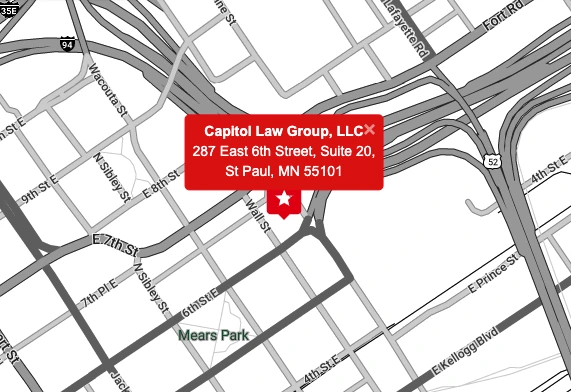


The Capitol City Law Group office is located in St. Paul, making it convenient to access attorneys in Minneapolis, St. Paul, and the Twin Cities metro area. We also serve the greater Minnesota area. We know that employment law and criminal defense concerns may require more immediate attention; please contact A.L. Brown, Marcus L. Almon, or Jennifer R. Congdon.
© 2026 Capitol City Law Group. All Rights Reserved.
