

 When employers violate wage and hour laws, they often harm not just one employee, but many through company-wide policies and practices. These widespread violations call for collective legal action to hold employers accountable and recover unpaid wages. Class and collective action lawsuits allow workers to join together, pool resources, and challenge illegal pay practices affecting the entire workforce.
Capitol City Law Group represents Minnesota employees in class and collective action wage and hour lawsuits. With over 50 years of combined experience, we know how to spot systemic wage violations, build cases for multiple employees, and secure the compensation that workers deserve. Contact us at (651) 705-6311 for a free consultation to discuss whether a class or collective action may be appropriate.
Understanding Class Actions and Collective Actions
 Class action and collective action lawsuits allow groups of employees with similar wage and hour claims to pursue their cases together rather than filing separate lawsuits. While these terms are sometimes used interchangeably, they refer to different legal processes under different laws.
Class actions typically proceed under Federal Rule of Civil Procedure 23 and allow workers to bring claims together when they share common questions of law or fact. Once a court certifies a class action, all employees who fit the class definition are automatically included unless they opt out.
Collective actions proceed under the Fair Labor Standards Act (FLSA) and require employees to affirmatively opt in to participate. Workers must take action to join the lawsuit rather than being automatically included. Collective actions are commonly used for overtime violations, minimum wage violations, and other federal wage and hour claims.
Both types of actions serve similar purposes, allowing employees to combine their claims, share litigation costs, and pursue justice together when employers violate wage laws on a systemic basis.
Common Types of Systemic Wage Violations
Employers implement various policies and practices that violate wage and hour laws for entire groups of employees. These systemic violations often result from company-wide decisions about pay structures, time tracking, classification, or compensation policies.
Off-the-Clock Work Requirements
Many employers require or permit employees to work off the clock without compensation. This occurs when employers require workers to arrive early for preparation, stay late to close or clean, work through meal breaks, or perform work from home after clocking out. When these practices affect multiple employees regularly, they create systemic violations that can support class or collective actions.
Misclassification of Employees as Exempt
The Fair Labor Standards Act requires employers to pay overtime to non-exempt employees who work more than 40 hours per week. However, some employers misclassify employees as exempt from overtime requirements even though their job duties don’t meet the legal standards for exemption. When employers misclassify entire categories of workers, such as assistant managers, team leaders, or supervisors, they deny overtime pay to groups of employees performing similar jobs.
Failure to Pay for All Hours Worked
Some employers implement time-rounding policies, automatic meal break deductions, or time clock systems that systematically undercount hours worked. When these policies affect multiple employees, they create patterns of unpaid work that can form the basis for class or collective actions.
Minimum Wage Violations
Employers sometimes pay workers less than minimum wage through various methods, including illegal tip pooling arrangements, improper deductions from paychecks, requiring employees to pay for uniforms or equipment, or simply paying less than the required minimum wage. When these practices affect multiple workers, they create systemic violations.
On-Call Pay Violations
Workers who must remain on-call often have rights to compensation for that time, particularly when on-call requirements restrict their ability to use that time freely. Employers who fail to pay employees for on-call time across an entire workforce or department create systemic violations affecting groups of workers. These violations are particularly common in healthcare, maintenance, and technology support roles where on-call work is routine.
Improper Deductions and Wage Theft
Some employers make improper deductions from employee paychecks for cash register shortages, damaged equipment, uniforms, or other expenses that employers should bear. When these deduction policies apply to multiple employees, they create systemic wage violations.
Requirements for Class and Collective Actions
Not every situation involving multiple employees with wage claims qualifies for class or collective action treatment. Courts impose specific requirements before allowing these cases to proceed on behalf of groups of workers.
For class actions under Rule 23, employees must demonstrate that their claims involve common questions of law or fact and that the representative plaintiffs’ claims are typical of the class members’ claims. Courts require that the proposed class include enough members that individual lawsuits would be impractical, typically at least dozens of employees.
For FLSA collective actions, employees must be “similarly situated” to participate. This generally means they perform similar job functions, are subject to the same pay policies, and are affected by the same alleged violations.
Courts must also determine that the representative plaintiffs and their class action attorneys will adequately represent the interests of all class or collective action members.
The Class and Collective Action Process
Class and collective action wage and hour cases follow specific procedural steps that differ from individual employment lawsuits.
Investigation and Filing
The process begins with investigating potential violations and gathering evidence that the employer’s policies or practices affected multiple workers. Your attorney from Capitol City Law Group reviews company policies, time records, pay stubs, employee handbooks, and other documentation to identify systemic violations.
Notice to Potential Class Members
In collective actions under the FLSA, courts typically authorize notice to potential class members early in the case, allowing other similarly situated employees to opt in. In Rule 23 class actions, notice typically comes after the court certifies the class.
Class Certification or Conditional Certification
For Rule 23 class actions, plaintiffs must move for class certification, demonstrating that the case meets all requirements for class treatment. For FLSA collective actions, courts typically grant conditional certification early in cases based on modest factual showings, with fuller review coming later after discovery.
Discovery
Discovery in class and collective actions often involves extensive document production, depositions of company officials, and analysis of payroll data for large numbers of employees. This process requires attorneys with experience handling large-scale employment litigation.
Settlement or Trial
Many class and collective actions settle before trial once discovery reveals the extent of violations and potential liability. Cases that don’t settle proceed to trial, where courts or juries determine whether violations occurred and what damages the employer owes.
Distribution to Class Members
After a settlement or trial judgment, attorneys and courts oversee the process of distributing the recovery to class members. This involves calculating individual awards based on factors such as hours worked, wages lost, and time periods of employment.
Benefits of Class and Collective Actions
Class and collective action lawsuits provide important benefits for employees facing systemic wage violations.
Shared Litigation Costs
Wage and hour litigation involves significant costs for document review, expert witnesses, depositions, and other expenses. Class and collective actions allow employees to share these costs rather than each worker bearing the full financial burden of individual litigation.
Strength in Numbers
Employers take class and collective actions seriously because they face potential liability to many employees. This leverage often leads to better settlement offers than individual workers might obtain alone. Additionally, multiple employees providing consistent testimony about company policies carries more weight than a single employee’s account.
Access to Justice for Small Individual Claims
Many wage violations result in relatively modest losses for individual employees, perhaps hundreds or a few thousand dollars per worker. The cost of individual litigation might exceed potential recovery. Class and collective actions make pursuing these claims economically viable by spreading litigation costs across many workers.
Systemic Change
Class and collective actions often result not just in monetary recovery but also in changes to employer policies that prevent future violations.
Minnesota and Federal Wage and Hour Laws
Class and collective action wage and hour cases can be brought under Minnesota state law, federal law, or both.
Minnesota law provides strong protections for workers, including minimum wage requirements that exceed federal minimums, overtime requirements, prompt payment of wages, and prohibitions against illegal deductions.
The FLSA establishes federal minimum wage and overtime requirements, recordkeeping obligations, and other protections for covered employees. The FLSA applies throughout the United States to employers engaged in interstate commerce.
At Capitol City Law Group, our wage and hour lawyers evaluate which legal framework provides the best path forward based on the specific violations involved, the available remedies, and procedural considerations.
Why Legal Representation From the Right Wage and Hour Class Action Attorney Matters
Class and collective action wage and hour litigation involves complex legal and procedural requirements that make experienced representation essential.
Recognizing when individual wage problems reflect systemic violations affecting many workers requires understanding wage and hour laws and common employer pay practices. Successfully navigating class certification requirements, notice processes, and extensive discovery requires class action lawyers with specific experience in complex employment litigation.
Determining appropriate compensation for dozens or hundreds of employees requires analyzing payroll data, work schedules, and wage calculations for each class member. Settlement negotiations must account for the interests of all class members, ensure fair distribution of recovery, and obtain court approval.
Taking Action Against Systemic Wage Violations
If you believe your employer has implemented policies or practices that violate wage and hour laws for you and your coworkers, taking action protects your rights and holds your employer accountable.
Start by documenting the pay practices that concern you. Keep copies of pay stubs, time records, schedules, written policies, and any communications about pay practices. Talk with coworkers to determine whether they experience similar issues.
Consult with an attorney experienced in class and collective action wage and hour litigation. At Capitol City Law Group, our attorneys can evaluate whether your situation involves systemic violations affecting multiple workers and whether a class or collective action is appropriate.
Be aware of time limits for bringing wage claims. Both Minnesota law and federal law impose statutes of limitations that limit how far back you can recover unpaid wages.
Contact Capitol City Law Group for Wage and Hour Class Action Representation
Systemic wage violations harm workers throughout Minnesota, denying employees the compensation they’ve earned through company-wide policies and practices. When employers violate wage and hour laws on this scale, class and collective actions provide the legal tools workers need to fight back and recover what they’re owed.
If you and your coworkers have been affected by employer policies that violate wage and hour laws, contact our attorneys at Capitol City Law Group at (651) 705-6311 for a free consultation. Let our experienced attorneys evaluate your situation and explain your options for pursuing a class or collective action to recover the wages you earned.
50+ Years Of Collective Experience
A Proven Track Record of Success
Trial-Tested, Zealous Legal Advocacy
Represent Cases At All Court Levels
Accomplished Trial Lawyers
Fields marked with an * are required
"*" indicates required fields
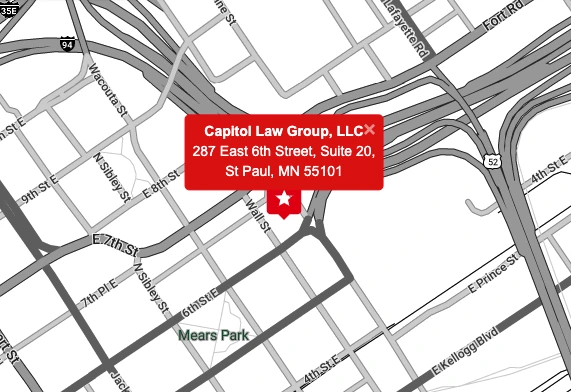


The Capitol City Law Group office is located in St. Paul, making it convenient to access attorneys in Minneapolis, St. Paul, and the Twin Cities metro area. We also serve the greater Minnesota area. We know that employment law and criminal defense concerns may require more immediate attention; please contact A.L. Brown, Marcus L. Almon, or Jennifer R. Congdon.
© 2026 Capitol City Law Group. All Rights Reserved.
