

5 Common Forms of Employment Discrimination

While discrimination is not limited to these examples, five common forms of employment discrimination in Minnesota include: age, race and color, sex and gender, retaliation, and disability. Each involves an employer making decisions based on a protected characteristic rather than an employee’s performance or qualifications. Minnesota and federal law prohibit this type of workplace discrimination in hiring, pay, promotions, and termination decisions.
What Is Age Discrimination in the Workplace?
Age discrimination happens when an employer treats a worker age 40 or older less favorably because of their age, affecting hiring, promotions, and layoffs. A few patterns show up most often in age discrimination complaints filed with state and federal agencies:
- Layoffs that target older employees while retaining less senior staff
- Job postings using coded phrases like digital native or recent graduate
- Sudden performance write-ups after decades of positive reviews
- Denial of training opportunities offered to younger coworkers
None of these signs alone proves discrimination, but a pattern across several strengthens a claim. Minnesota workplace discrimination attorneys often flag the filing deadline first, since a charge with a state or federal civil rights agency generally must be filed within one year with the state or 300 days with the federal EEOC.
How Does Race and Color Discrimination Show Up on the Job?
Race and color discrimination is when an employer makes decisions based on a worker’s race, ethnicity, or skin tone rather than qualifications or job performance. Minnesota addresses this conduct under Minn. Stat. § 363A.08, prohibiting race and color discrimination in hiring, pay, promotions, and termination.
Bias often appears through assumptions about accents, hairstyles, or cultural attire instead of explicit slurs. It may also surface in unequal discipline, denied opportunities, or different workplace standards applied to employees of different racial backgrounds.
What Counts as Sex and Gender Discrimination?
Sex and gender discrimination is unequal treatment based on a worker’s sex, gender identity, or pregnancy, showing up in unequal pay, denied promotions, and demotions that follow a pregnancy disclosure. When unwelcome conduct becomes a job condition, sexual harassment falls under this category.
A few situations commonly raise sex or gender discrimination concerns in Minnesota workplaces:
- Pay gaps between employees performing substantially similar work
- Denial of promotions tied to assumptions about caregiving duties
- Uneven dress code enforcement based on gender presentation
Pay-based claims require comparing wages against a coworker in a similar role, so payroll records and job descriptions become key evidence.
What Is Workplace Retaliation, and How Does It Connect to Discrimination?
Retaliation occurs when an employer punishes a worker for reporting discrimination or participating in an investigation, often shortly after the protected activity. The Minnesota Whistleblower Act protects workers who report a suspected legal violation in good faith.
Retaliation can take several forms beyond termination, and Minnesota courts recognize many types of adverse action as evidence:
- Sudden schedule cuts after reporting a safety or discrimination concern
- Exclusion from meetings or projects following a complaint
- A performance review that contradicts years of raises or promotions
- Denial of a raise or bonus shortly after protected activity
A short gap between the protected activity and the adverse action often becomes the strongest evidence in a retaliation claim. Minnesota employment law attorneys typically build a timeline from records before and after the complaint.
What Are Your Rights Under Disability Discrimination Law?
Disability discrimination happens when an employer denies a qualified worker a reasonable accommodation or treats them worse because of an impairment. Both the Americans with Disabilities Act and Minnesota law require an interactive process, meaning the employer and employee must discuss possible accommodations together before denying one. Denials regularly rest on a vague claim of undue hardship rather than documented costs.
Common examples of disability discrimination include:
- Denying a modified schedule or remote work request without discussing alternatives first
- Refusing to provide equipment or tools that would let an employee do their job
- Demoting or reassigning an employee shortly after they disclose a medical condition
- Never following up after an employee requests an accommodation
Our Minnesota Employment Law Attorneys Can Review Your Case
You do not have to figure out Minnesota discrimination law on your own, and small details in your timeline can matter more than they seem. At Capitol City Law Group, our Minnesota workplace discrimination lawyers bring more than 50 years of combined experience to these claims and offer free consultations to review what happened.
Call [phonenumber], or contact us online before any filing deadline passes.
50+ Years Of Collective Experience
A Proven Track Record of Success
Trial-Tested, Zealous Legal Advocacy
Represent Cases At All Court Levels
Accomplished Trial Lawyers
Fields marked with an * are required
"*" indicates required fields
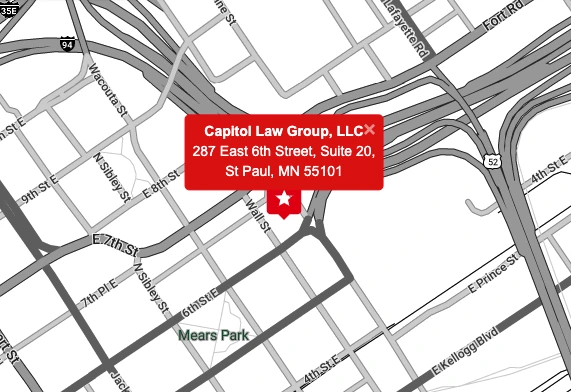


The Capitol City Law Group office is located in St. Paul, making it convenient to access attorneys in Minneapolis, St. Paul, and the Twin Cities metro area. We also serve the greater Minnesota area. We know that employment law and criminal defense concerns may require more immediate attention; please contact A.L. Brown, Marcus L. Almon, or Jennifer R. Congdon.
© 2026 Capitol City Law Group. All Rights Reserved.
