

Minnesota First-Time DWI Lawyer

A first-time driving while impaired (DWI) arrest can turn an ordinary night into a serious legal problem fast. The flashing lights, the ride to the station, and the paperwork handed to you afterward leave most people wondering what comes next, whether their job is at risk, and how long it will take to get back to normal. Those concerns are real, and they become easier to manage once you understand what the process actually involves.
Most first-time DWI cases in Minnesota follow a predictable path through criminal court and the Department of Public Safety. There are practical steps you can take right now: write down everything you remember about the stop, request a hearing to contest your license revocation within the 60-day window, and avoid posting anything about the incident online.
Call Capitol City Law Group at (651) 705-6311 or contact us online for a free consultation with a Minnesota first-time DWI lawyer.
First-Time DUI State Laws

Minnesota prohibits operating a motor vehicle with a blood alcohol concentration (BAC) of 0.08 or higher, or while impaired by alcohol, a controlled substance, or any intoxicating substance. The governing statute, Minnesota Statutes § 169A.20, applies to every driver on public roads, private property, and certain off-road areas throughout the state.
First-Time DUI Penalties
A first-time DWI in Minnesota is typically charged as a fourth-degree DWI, a misdemeanor offense, though aggravating factors can push the charge into more serious territory. The penalties affect both the criminal and administrative sides of a driver’s life:
- Jail time: Up to 90 days in jail for a standard fourth-degree first offense.
- Alternative sentencing: Often includes probation for up to two years, a chemical dependency assessment, and community service.
- Criminal penalties: Fines up to $1,000, plus court costs and a mandatory chemical dependency assessment.
- License revocation: Loss of driving privileges for 90 days, or longer if the BAC was 0.16 or above.
- Ignition interlock device (IID): Required for drivers who want limited or full driving privileges restored during the revocation period.
- Aggravated factors: A BAC of 0.16 or higher, a child in the vehicle, or refusing to take a chemical test can elevate the charge to a gross misdemeanor aggravated DWI charge with harsher penalties.
Specific penalties depend on the facts of each case, and outcomes in Ramsey County District Court can differ from those in Hennepin County, based on local prosecution practices. First-time offenders with no prior record may be eligible for alternatives that lessen the impact of a conviction.
Administrative and Long-Term Consequences of a First-Time DWI in Minnesota
A first-time DWI triggers administrative actions that run on a separate track from the criminal case and can follow a driver for years:
- Vehicle forfeiture: Possible in cases involving high BAC readings or test refusals when aggravating factors apply.
- Whiskey plates: Special license plates may be required on any vehicle the driver operates after certain aggravated first offenses.
- Insurance: Auto insurance premiums often double or triple, and some carriers drop coverage entirely.
- Permanent record: A DWI conviction stays on a criminal record and driving history, affecting future employment and housing applications.
Administrative deadlines move faster than criminal proceedings, making decisions in the first few weeks especially important.
Underage Offenders
First-time DWI charges affect drivers of all ages, but underage drivers face additional exposure. Minnesota enforces a zero-tolerance rule for drivers under 21, meaning any detectable alcohol can trigger a license suspension, even without reaching the 0.08 threshold. Underage drivers also face fourth-degree DWI charges if their BAC reaches 0.08, along with mandatory education programs and lasting impacts on college and scholarship opportunities.
Defense Strategies Against Minnesota First-Time DWI Charges
Every first DWI case has points where the state’s evidence can be questioned. Our attorneys carefully review each one, looking closely at the stop, the arrest, and every test that followed to find the strongest possible defense:
- Challenging the legality of the traffic stop
- Questioning the officer’s probable cause for arrest
- Attacking the reliability of breath, blood, and urine tests
- Reviewing dash cam and body cam footage
- Examining implied consent advisory compliance
- Pursuing rising BAC and absorption defenses
- Identifying constitutional violations for suppression motions
Defense strategies depend on the specific facts of each case. An early review of your situation can reveal opportunities to reduce charges, seek alternative resolutions, or achieve a dismissal when the evidence supports it.
Trust Capitol City Law Group to Protect Your Rights
With more than 50 years of combined legal practice serving drivers across Ramsey and Hennepin Counties, Capitol City Law Group is prepared to defend your rights with competent, trial-tested advocacy. We have secured numerous dismissals and not-guilty verdicts for clients facing impaired driving charges, including aggravated matters. We approach every first-time DWI case by:
- Moving to have charges dismissed: We file suppression motions targeting unlawful stops, faulty tests, and procedural errors that can lead to outright dismissal.
- Negotiating a plea: When a trial is not the best path, we work with prosecutors to secure reductions, such as a careless driving charge, in exchange for favorable terms.
- Representing you at trial: When the case is before a jury, our attorneys present your defense with preparation drawn from years of courtroom experience.
First-time DWI clients who reach out early keep more options open and improve their chances of protecting their record going forward.
FAQ: What to Know After a First-Time DWI in Minnesota
Do I Legally Have to Take the Field Sobriety Test?
Field sobriety tests are voluntary in Minnesota, and politely declining them is within your rights. Refusing these roadside exercises does not carry the same legal penalties as refusing a chemical test after arrest, though officers may still use their observations as evidence later.
Can a First-Time DWI in Minnesota Be Expunged?
A first-time DWI conviction may be eligible for expungement after a waiting period, typically several years after the sentence is complete. Eligibility depends on the degree of the offense, the driver’s record since then, and whether the court finds expungement serves the interests of justice.
How Do First-Time DUI Marijuana Cases Differ?
Cannabis-related DWI cases rely heavily on officer observations and drug recognition evaluations because Minnesota Statutes § 169A.03 does not set a per se THC limit. Metabolites can remain in the body long after any impairing effects have ended, which creates real challenges for prosecutors trying to prove actual impairment at the time of driving.
What Happens to My Driver’s License After a First-Time DWI Arrest in Minnesota?
The Department of Public Safety handles license revocation separately from the criminal case, and the window to challenge it is short. An attorney can file the hearing request on your behalf and argue against the revocation, steps that are easy to overlook when you are focused on the criminal side of things.
Building Your Defense Against a Minnesota First-Time DUI Charge
Key deadlines start running the moment you are arrested. Acting now gives you the chance to challenge a license revocation, preserve favorable evidence, and shape your case before prosecutors finalize their position. Reach out to Capitol City Law Group at (651) 705-6311 or through our online form to schedule a free consultation with our Minnesota first-time DWI lawyers.
50+ Years Of Collective Experience
A Proven Track Record of Success
Trial-Tested, Zealous Legal Advocacy
Represent Cases At All Court Levels
Accomplished Trial Lawyers
Fields marked with an * are required
"*" indicates required fields
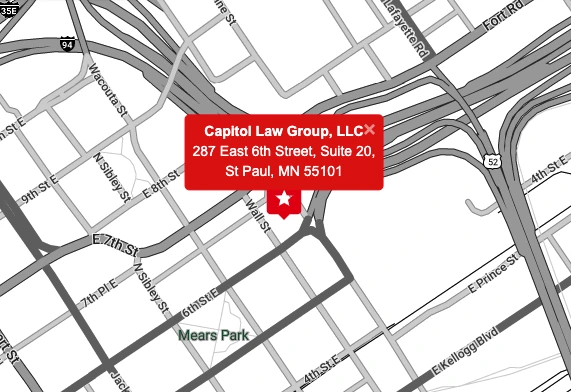


The Capitol City Law Group office is located in St. Paul, making it convenient to access attorneys in Minneapolis, St. Paul, and the Twin Cities metro area. We also serve the greater Minnesota area. We know that employment law and criminal defense concerns may require more immediate attention; please contact A.L. Brown, Marcus L. Almon, or Jennifer R. Congdon.
© 2026 Capitol City Law Group. All Rights Reserved.
