

Minnesota White Collar Crime Lawyer
 Nobody hands you a notice saying the audit turned into something bigger. The signal is quieter than that: an accountant stops returning calls, a bank freezes an account, or an agent asks for “just a few minutes” outside your office. Financial cases in Minnesota usually start long before charges appear, built from emails, invoices, and signatures you barely remember making.
That slow build cuts both ways. The stretch before an indictment is the best chance you will get to answer questions on your own terms, and that stretch is where Capitol City Law Group does some of its strongest work. Our Minnesota white collar crime lawyers jump in early to speak with investigators, share context prosecutors do not have, and sometimes close a matter before anyone files it.
Every conversation with our lawyers stays private, and the first one costs nothing. Call 651-705-6311 or contact us online to schedule a free consultation and find out what the government may already have on paper.
Why White Collar Crime Cases Land on Our Desk
 Fraud cases are built on documents, not eyewitnesses. At Capitol City Law Group, our attorneys analyze financial records, loan files, and billing documents.
Our team is backed by 50+ years of combined experience. Clients choose us for three reasons:
- Early contact: Our attorneys engage with prosecutors as early as possible, often before formal charges are filed.
- Command of the paper trail: Our team reviews financial records and transactions line by line to identify errors and support your defense.
- Honest odds: We provide a straightforward assessment of the case, helping you make informed decisions about your options.
No two sets of books look alike, so no two plans should either. Our case results show how those choices played out for business owners, bookkeepers, and licensed professionals facing serious loss numbers.
What Counts as a White Collar Crime
White collar crime covers non-violent offenses where someone gains money, property, or an advantage through deception. Prosecutors need no weapon and no injury, only proof that you knowingly misled someone for financial gain.
Charges filed in Ramsey County courts most often involve:
- Embezzlement from an employer or a client trust account
- Insurance, mortgage, and healthcare billing fraud
- Identity theft and credit card fraud
- Tax evasion and false business filings
- Money laundering
The name of the charge tells you almost nothing about the facts behind it. Prosecutors can file the same count against a bookkeeper who shifted money to cover payroll and a manager who invented vendors, and intent separates the two.
Signs an Investigation Has Already Started
Many people learn about a financial investigation through subtle warning signs rather than a formal notice. Acting quickly can make a real difference before charges are filed or the investigation expands. Warning signs that deserve immediate attention include:
- A grand jury subpoena for business or bank records
- Coworkers reporting interviews with agents
- A sudden internal audit run by outside counsel
- Requests to sign statements without counsel present
A sound criminal defense strategy starts before charges exist, not after. Our attorneys would rather take the first agent phone call than repair an interview that already went badly, and reaching our Minnesota white collar crime lawyers early costs you nothing but an hour.
Penalties Minnesota Courts Can Impose
In cases involving theft by swindling (a Minnesota charge for using deception to take someone’s money or property), the alleged loss amount often drives the potential sentence. Under Minnesota Statutes § 609.52, larger dollar amounts have substantially harsher penalties. Restitution, which means repaying the victim for their financial loss, may also be ordered, and the consequences may include the following:
- Prison terms and substantial fines
- Loss of licenses issued by state boards
- Bars from federal contracting and healthcare programs
- Immigration consequences for non-citizens
- Closed business accounts and damaged credit
Judges weigh cooperation, repayment, and how long the conduct lasted. A record showing money returned before charges were filed reads very differently at sentencing than one built on courtroom promises, and later expungement options depend on how the case ends.
State Court, Federal Court, or Both
Jurisdiction can substantially affect how a fraud case proceeds. Most fraud charges are prosecuted in Minnesota state district courts. However, cases involving wire transfers, mail fraud, or federal benefit programs may be handled in the United States District Court for the District of Minnesota. The differences become apparent early, including:
- Federal agents often investigate for a year or more before charges
- Sentencing guidelines drive federal outcomes more than state ranges
- State cases usually move faster and resolve earlier
- Both systems can charge the same conduct
Overlap is common in these cases, and a state matter can go federal without warning once agents connect the money to another jurisdiction. Our Minnesota white collar crime lawyers handle federal crimes alongside state filings, so the plan does not restart when the courthouse changes.
FAQ: Common Questions About Minnesota White Collar Crime
Can You Be Charged If You Never Personally Took Any Money?
Yes. Prosecutors may charge anyone who knowingly approved transactions, signed documents, or participated in the scheme. Liability depends on knowledge and involvement, so a manager who approved fraudulent invoices can face the same charges as the person who received the money.
How Long Do Prosecutors Have to Bring White Collar Charges?
Most financial charges must be filed within three years under Minnesota Statutes § 628.26, though several theft and fraud offenses carry longer deadlines. Federal fraud cases generally run five years, and bank fraud stretches to ten.
Should You Speak With Your Employer’s Internal Investigators?
Not before you get advice. Company counsel represents the company, and what you say can go straight to prosecutors in a voluntary disclosure. Our team can arrange a written response instead of a recorded interview.
Will Investigators Tell You Whether You Are a Target or a Witness?
Sometimes. Federal prosecutors often send target letters, official notices naming someone as the focus of an investigation, while state investigators seldom put anyone in a category at all. Our attorneys can ask that question directly, and the answer changes how you respond to a subpoena.
Do Most White Collar Cases Go to Trial?
No. Many fraud cases are resolved through dismissal, diversion (a program that can avoid a conviction if certain conditions are met), or negotiated plea agreements without a trial. Trial may be the better option when the alleged loss or the evidence of intent is weak.
Help Begins With One Phone Call to Our Minnesota White Collar Crime Lawyers
Investigations continue whether you act or not, and delays can give prosecutors more time to build their case. Bring your documents to Capitol City Law Group, and if our attorneys take your case, we will evaluate your situation, explain your options, and begin building your defense right away.
Call 651-705-6311 or contact us online to schedule a free consultation with our Minnesota white collar crime lawyers.
50+ Years Of Collective Experience
A Proven Track Record of Success
Trial-Tested, Zealous Legal Advocacy
Represent Cases At All Court Levels
Accomplished Trial Lawyers
Fields marked with an * are required
"*" indicates required fields
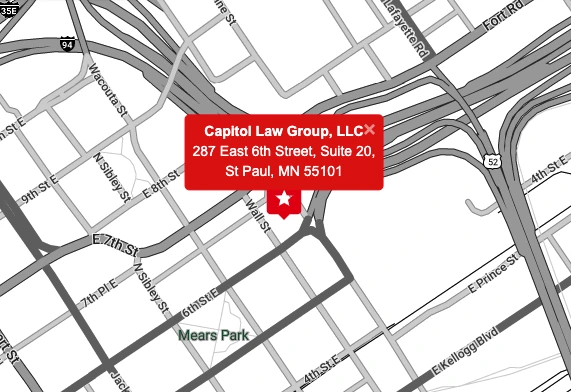


The Capitol City Law Group office is located in St. Paul, making it convenient to access attorneys in Minneapolis, St. Paul, and the Twin Cities metro area. We also serve the greater Minnesota area. We know that employment law and criminal defense concerns may require more immediate attention; please contact A.L. Brown, Marcus L. Almon, or Jennifer R. Congdon.
© 2026 Capitol City Law Group. All Rights Reserved.
